

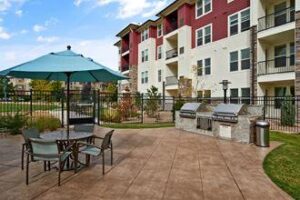
In the wake of our world’s harsh climate concerns in this last century which are considered the effects of industrialization, there is now a rising need for more sustainable ways of developing societies with little to no climatic consequences. A number of industry players have taken it upon themselves to combat some of these challenges we are faced with, and one notable area which is seeing significant progress is the real estate sector.
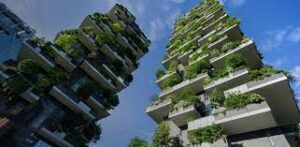
As campaigned in the United Nations Sustainable Development Goal eleven (SDG 11) especially, communities of today are more open to the idea of sustainable cities. The Museum of Tomorrow in Brazil, The Crystal in London, The Edge in Amsterdam, Olympic House in Switzerland, Pixel Building in Melbourne and One Central Park in Sydney are only a few of many buildings considered as most sustainable in the world. Most of these sustainable buildings are made with eco-friendly materials and processes; they are also maintained in a way that conserves energy and avoids environmental pollution.
The Olympic House for instance is considered one of the most sustainable buildings in the world currently. Its cooling system is generated from a river nearby the building, and the building itself is powered by solar power. The building is also made in a way that allows in natural sunlight to augment its lighting system.
Apart from it being built from ninety-seven per cent (in terms of weight) of the materials that made up the former International Olympic Committee (IOC) administration buildings which have been recycled or reused, over 75 per cent of waste produced during the construction work of the building has been reused or recycled.
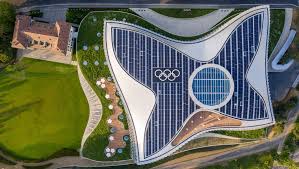
In terms of its operation in comparison with a standard new office building, the municipal water consumption by the Olympic House is reduced by 60% thanks to its rainwater harvesting feature among others; energy consumption is also reduced by 35%, as it inculcates on-site renewable energies such as solar panels and heat pumps. Another remarkable sustainability feature of the Olympic House is the fact that nearly all the foods offered in its cafeteria are locally grown. And of course, this is typical of what a sustainable city should look like. Even today, more and more smart and sustainable cities continue to emerge. The Mega Star Cities project is one of such developments, which does not only seek to put up sustainable buildings, but to create sustainable communities or cities where individuals can live better lives economically, psychologically, socially, and health-wise.
The world is moving towards practices that conserve energy and maximize the use of resources. Cities of today and the future are ones that will be safe and conducive for dwelling. They are cities where health, emotional and social needs of people can be met without malice.